The Complete Replica WWE Championship Belt Buying Guide for 2026
Search “WWE championship belt for sale” and you’ll find everything from $35 plastic toys to $700 hand-finished collector pieces, all listed under the same name. That gap is where most buyers get burned. Pay a premium price and you might still end up with a belt that scratches in a month. Go cheap without knowing what to check, and you get a floppy strap and paint that flakes off within weeks.
A replica WWE championship belt is a purchase you’ll live with for years, whether it hangs on a wall, gets worn for photos, or becomes part of a wrestling promotion’s storyline. This guide walks through exactly what separates a belt worth owning from one you’ll regret, using the same criteria collectors and belt makers use before they spend a dollar.
Quick Answer
A quality replica WWE championship belt has a solid zinc-alloy or brass plate at least 2mm thick, a genuine leather strap, and enamel or hand-painted color fill instead of printed stickers. Budget $150–$400 for a solid display piece, $450–$550 for an officially licensed adult belt, and $500–$800+ for a premium custom build with thicker plates and personalization.
What “Replica” Actually Means (It’s More Confusing Than It Sounds)
Every seller uses the word “replica,” but it covers three very different products.
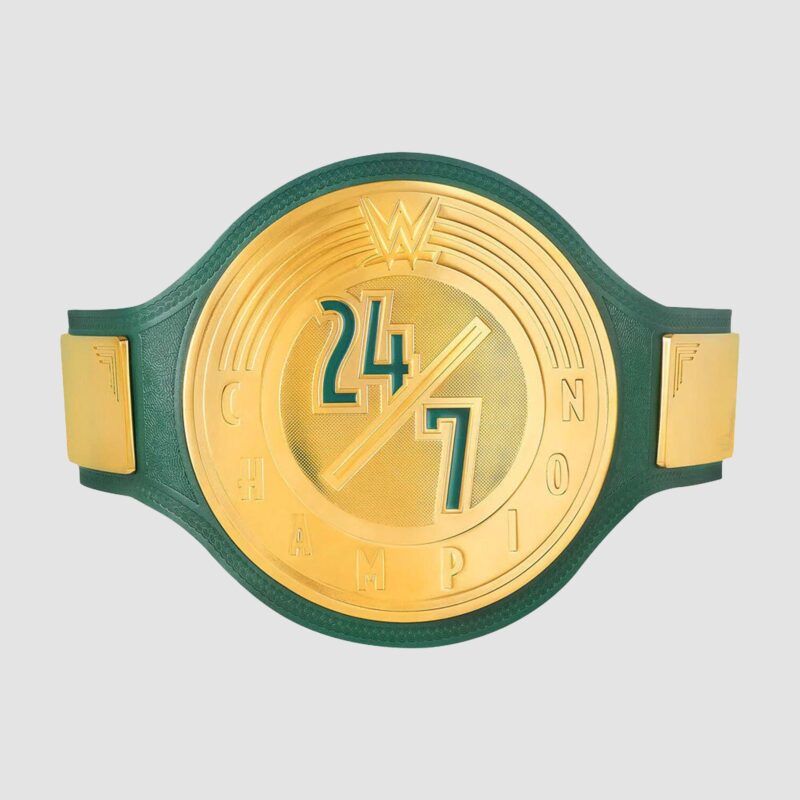
Officially licensed replicas come from WWE Shop, produced under WWE’s licensing agreement with Fanatics. These carry official branding and are modeled on the exact title design worn by current champions. As of 2026, the adult WWE Championship replica sells directly through WWE Shop for right around $500.
Premium custom or fan-made replicas come from independent belt makers who aren’t licensed by WWE but specialize in recreating the same designs down to the plate shape, color fill, and leather. These aren’t sold as “official” products — reputable makers are upfront that they’re tribute or inspired pieces — but many use thicker metal, real leather, and better hand-finishing than mass-market licensed options, which is why serious collectors often prefer them.
Toy-grade and budget belts are built for costumes, kids, and casual fans. They’re lightweight, often plastic or thin stamped metal, and priced to match.
None of these is automatically “the best.” A toy-grade belt is fine for a five-year-old’s birthday. A $500 licensed belt is overkill for someone who wants it for one Halloween photo. Matching the tier to your actual use case is the real skill here, and it’s covered in the decision guide further down.
The 5 Things That Actually Determine Quality
Price alone won’t tell you what you’re getting. These five factors will.
1. Plate Material and Thickness
The center plate and side plates are the heart of the belt. Solid zinc alloy or brass holds detail sharply and doesn’t warp. Thickness matters more than most buyers realize — 2mm plates are common at entry-level price points, 4mm is where belts start to feel substantial, and 6mm is the range serious collectors ask for because it matches the heft of a screen-used title. Cheaper belts sometimes use thin pot metal or even resin dressed up to look like metal in photos.
2. Strap Material
Genuine cowhide leather ages well, holds its shape, and develops a natural patina. Synthetic PU or vinyl straps look fine in photos but tend to crack or peel within a year, especially with any real wear or sun exposure.
3. Finish and Plating
Real electroplating over zinc or brass gives a durable gold or silver tone that resists flaking. Painted or lacquered finishes are cheaper to produce but wear through at friction points — snap closures, buckle contact, plate edges — faster than plating does.
4. Detail Accuracy
Look closely at how the color fill is done. Hand-applied enamel or resin fill sits flush and holds up over time. Printed decals or stickers under a clear coat can bubble, yellow, or peel at the edges within a season.
5. Construction and Hardware
Check how the plates attach to the strap. Riveted construction outlasts glued-only construction by years. Multiple adjustment holes or a snap system matter more than they seem to until you’re trying to fit the belt to an actual waist rather than a mannequin.
How Much Should You Pay?
Here’s what each price tier typically gets you, based on current market pricing across major replica and officially licensed sellers.
Notice that officially licensed doesn’t automatically mean the highest build quality — it means official branding. A premium custom belt at a similar price point can use thicker plates and real leather because the cost goes into materials rather than licensing fees. For a deeper breakdown of exactly where that money goes, see our guide on how much a WWE championship belt costs.
How to Choose the Right Belt: A 7-Step Process
- Decide your purpose first. Display piece, cosplay, gift, or use in an actual wrestling promotion? This single decision eliminates most of the guesswork.
- Pick your title design. Iconic designs like the Attitude Era Big Eagle, the Winged Eagle, the Smoking Skull, and the current Undisputed WWE Championship all have different demand and price points. Pick the one that means something to you, not the one that’s cheapest.
- Set a realistic budget tier. Use the table above. Decide before you start browsing so listings don’t pull you toward overpaying for features you don’t need.
- Check the plate spec. Look for the material and thickness listed in millimeters. If a listing doesn’t mention either, treat that as a red flag, not an oversight.
- Confirm strap material and sizing. “Genuine leather” and “leather-look” are not the same thing. Check the listed waist range against your own measurement.
- Vet the seller. Look for real product photos (not just renders), verified reviews, and a clear return policy. Belt-specific sellers with a track record are safer than generic dropship storefronts.
- Decide on customization. Nameplates, engraving, and side-plate personalization usually add $20–$80 but turn a generic belt into something that actually feels like yours.
Getting the Sizing Right
Sizing trips up more buyers than any other factor, mostly because it’s easy to assume “adult size” means one universal fit.
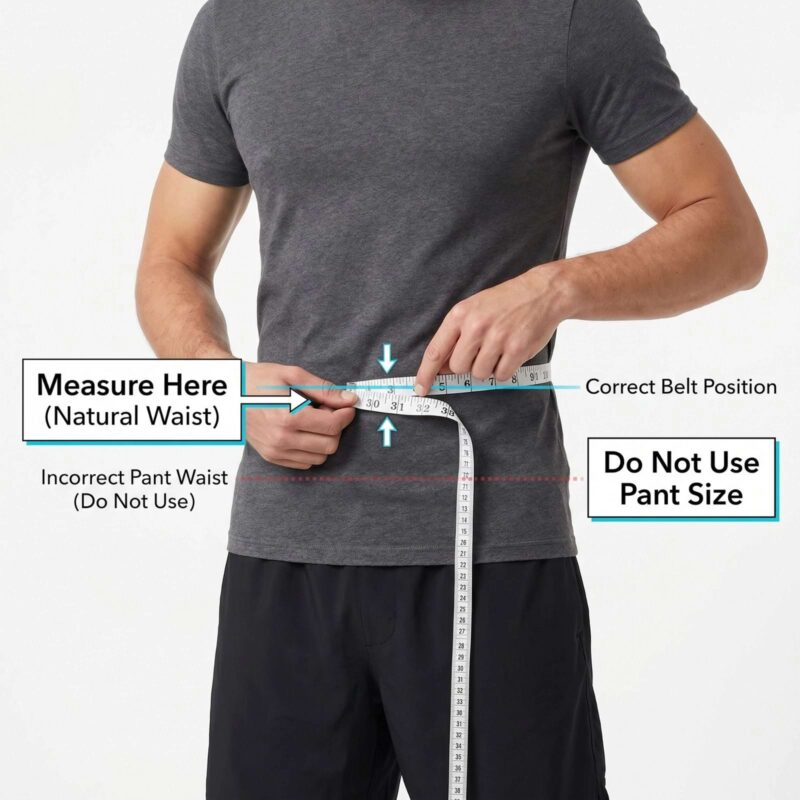
Youth and commemorative-size belts are typically built to fit waists up to about 36 inches. Standard adult replicas usually adjust from roughly 28 to 44 inches through multiple snap holes, and some premium makers offer extended straps or add-a-link options for waists beyond that. If you’re between sizes or buying as a gift, measure the actual waist rather than guessing from clothing size, since belts sit differently than pants.
Common Mistakes First-Time Buyers Make
- Buying on price alone. The cheapest option in a search result is almost always the toy-grade tier, even when the listing photos suggest otherwise.
- Skipping the plate thickness spec. A listing that only says “metal plate” without a millimeter measurement is usually thin stamped metal.
- Assuming “gold-plated” means solid gold. Every replica belt, licensed or not, uses gold-tone plating or paint over a base metal. Solid gold belts don’t exist outside of one-off custom pieces costing thousands.
- Ignoring the return policy. Dropship listings with no return option are a common source of buyer complaints once the belt arrives underweight or off-color.
- Overlooking strap length for larger builds. Standard adult sizing doesn’t fit everyone. Confirm the maximum waist before buying if you’re above average size.
- Not asking for real photos. Renders and stock photos can hide plating quality, color accuracy, and strap texture that only show up in person.
Don’t Assume a 2 mm or 4 mm Belt Is Actually That Thick
Plate thickness is one of the biggest scams buyers encounter in the replica championship belt market. Unfortunately, the thickness stated in a listing does not always tell the whole story. Some sellers may advertise plates as 2 mm when the actual metal measures closer to 1.5 mm, while some listings marketed as 4 mm may use plates that are closer to 2 mm. This can be especially important when comparing marketplace listings on platforms such as eBay and Etsy.
A small difference in thickness can affect the belt’s weight, rigidity, appearance, and overall feel. That’s why buyers shouldn’t rely solely on the number shown in a product title or description.
How to Verify Championship Belt Plate Thickness
If you’re serious about buying a replica championship belt, ask the seller for the actual plate thickness and consider verifying it yourself with a vernier caliper after receiving the belt. A caliper gives you a much more reliable measurement than simply trusting the advertised specification.
How We Handle Plate Thickness at Clash Champion Belts
At Clash Champion Belts, we offer 2 mm, 4 mm, and 6 mm plate thickness options. We aim to provide the actual thickness specified when you place your order rather than using a thinner plate and labeling it as a thicker option.
You can verify the plate thickness yourself using a vernier caliper. If the actual plate thickness does not match the thickness stated in your product description, we offer a full refund.
Ready to choose your belt? Explore our WWE championship belts and choose the plate thickness that fits the look, weight, and quality you’re after. Buy with confidence knowing you can verify the thickness yourself.
Myths vs. Facts
Expert Tips From Belt Collectors
- Ask any seller directly whether the plates are one-piece cast or multi-piece assembled. One-piece casting holds detail better over time and doesn’t develop visible seams.
- A clear protective coat over the plating slows tarnishing significantly, especially for belts that will see real wear rather than staying in a display case.
- If you’re buying a title associated with a specific era or wrestler, match the plate design to the actual years that champion held it. Design details changed multiple times even within a single title’s history, and mismatched details are the first thing other collectors notice.
- For gifts, a nameplate or custom engraving usually matters more to the recipient than an extra millimeter of plate thickness.
Which Replica Belt Fits Your Situation?
Casual fan or one-time costume: A budget or mid-range belt ($100–$250) covers you. You don’t need 6mm plates for a convention appearance or a Halloween photo.
Serious collector building a display: Go premium custom ($350–$800). The thicker plates, real leather, and accurate color fill are what hold up under close inspection over years, not months.
Gift for a wrestling fan: Mid-range with a custom nameplate hits the sweet spot between cost and a personal touch that makes it feel less generic.
Backyard promotion or content creator: Prioritize construction and strap durability over cosmetic detail. A belt that gets handled, worn, and photographed repeatedly needs riveted hardware and a reinforced strap more than it needs museum-grade enamel work.
People Also Ask
The Bottom Line
The difference between a belt you’re proud to own and one that disappoints you within a year comes down to four checks: plate material and thickness, strap material, how the detail work is applied, and how the hardware is constructed. Price is a signal, but it’s not the whole story — a mid-range belt with the right specs can outlast a pricier one built on brand name alone.
Know your purpose, match your budget tier to it, and check the specs before the photos. That’s the difference collectors and casual buyers alike wish they’d known before their first purchase.
Ready to find your belt? Browse our full collection of hand-finished replica championship belts, built with zinc or brass plates in 2mm, 4mm, and 6mm options and genuine cowhide straps for anyone who wants the real weight of a title without the guesswork.